L’adage le dit pourtant : on ne change pas une équipe qui gagne !
Big mistake of mine : I've trust my dentist.
Pour faire au plus court, j’ai voulu me débarrasser de vieux « plombages » au mercure (qui avaient pourtant tenu 30 ans sans signe de faiblesse), au bénéfice des formidables solutions modernes… Big mistake : l’une des dents n’a pas aimé la transition et s’est impunément fêlée. Au résultat des courses, une couronne est devenue nécessaire – le genre de truc que je ne souhaite à aucun ennemi (si j’en avais), car ça fait mal, très mal !
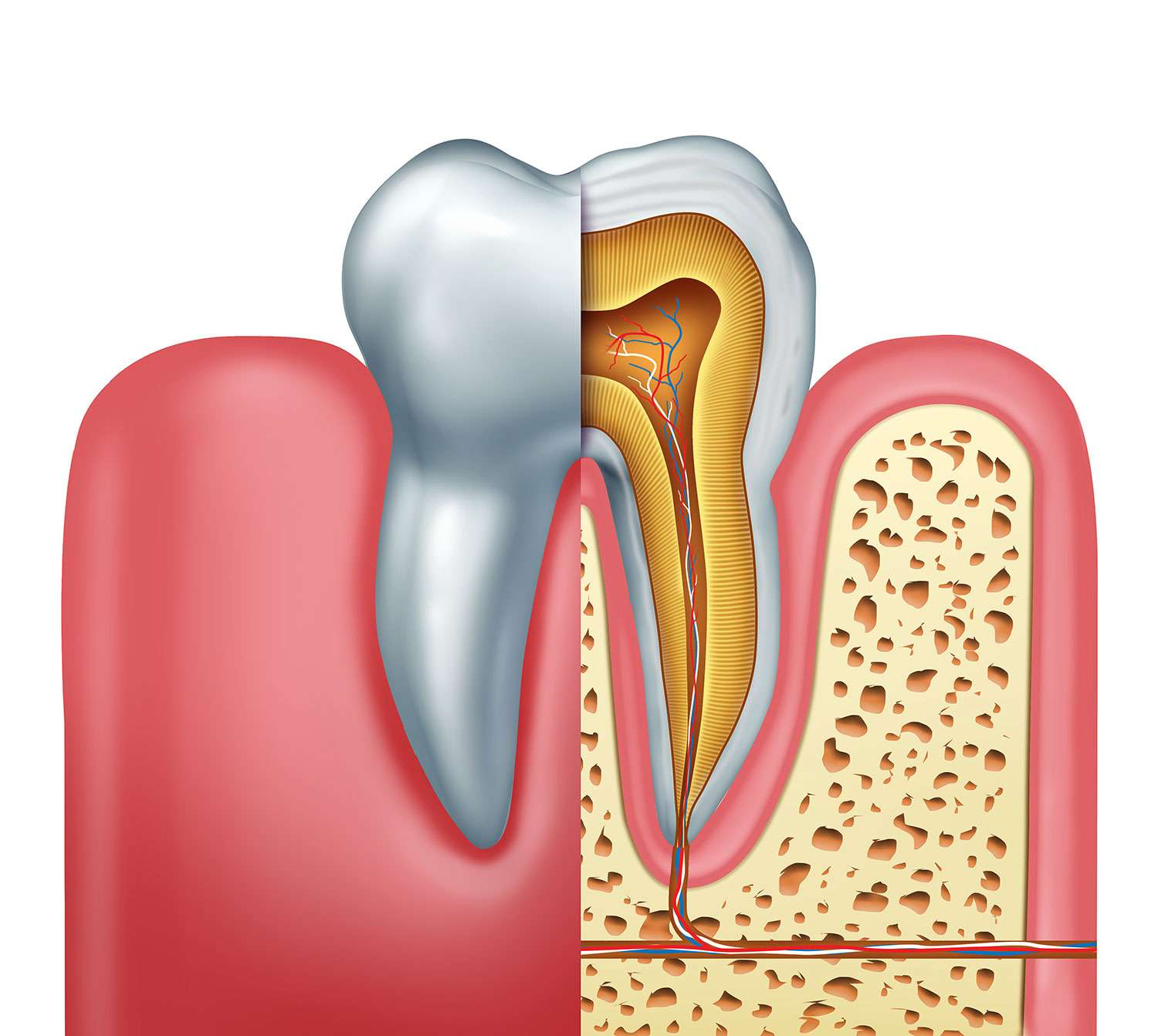
About our inaptitude to understand the other’s pain
Let’s get to the core of this post : one another’s pain…
Alors que ma chère et tendre épouse m’expliquait à quel point sa propre expérience avait été douloureuse, je l’écoutais avec toute mon attention. Et pourtant, ne songeais-je pas, en mon fort intérieur : “c’est sans doute une situation pénible, mais à moi, ça n’arrivera clairement pas ! Après tout, la couronne transitoire ne m’avait pas fait tellement mal, alors pourquoi en irait-il autrement avec la définitive ?”
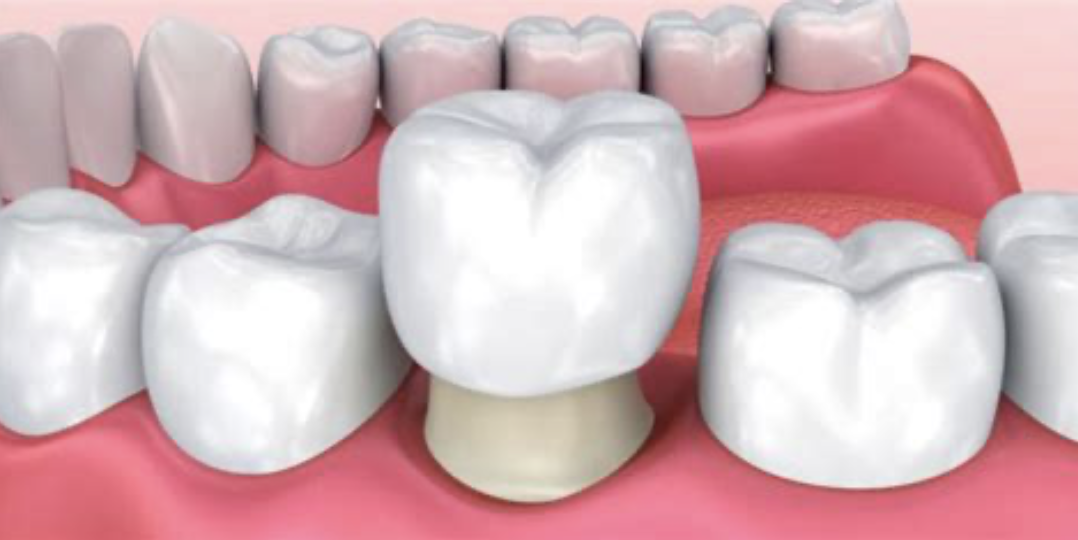
Or, comme dit le pessimisme : “ça ne peut pas être pire”… Ce à quoi l’éternel optimiste répond : “mais si, ça peut !”.
Here’s the optimist was right : when we got to the final stage, the pain became unbearable.
Essayez donc d’imaginer : la dent semble à vif ; la moindre pression sur le haut et elle s’enflamme d’un seul coup.
Certes, cela prouve qu’elle est vivante, mais tout se passe comme ci quelqu’un venait en chatouiller le nerf ! De plus, comme, malgré mes efforts d’évitement, l’expérience se répète encore et encore, une douleur sourde subsiste entre les pics…
Si j’écris tout cela sur le vif de l’expérience (c’est le cas de le dire), c’est parce que je mesure à quel point nous sommes incapables de comprendre ce que vit autrui.
Of course, it's still possible to grasp it intellectually, but that remains quite mental and rather cold.
Je lis actuellement un excellent bouquin d’un rescapé du goulag et s’il décrit effectivement les sévices que le système et ses sbires lui ont fait subir, et bien que cela nous laisse réellement songeur, il reste pourtant rare d’être en réelle compassion.
En l’occurrence, suite à cette expérience personnelle, je comprends ce que peut représenter la torture… et je comprends aussi qu’il est possible de faire avouer n’importe quoi, à n’importe qui, y compris un crime qu’il n’a pas commis.
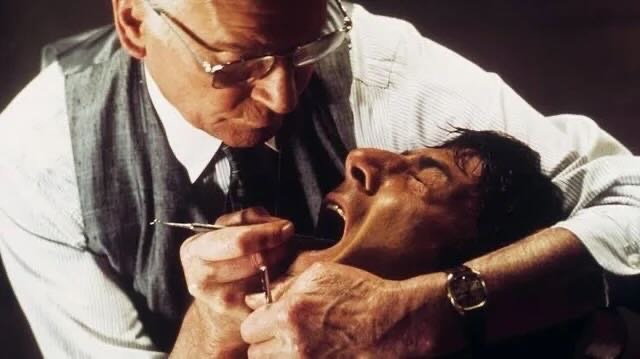
“Marathon Man” (réalisé par John Schlesinger, 1976), extrait de cette this mythical couple of sequences)
De la force de l’art
Je recours une fois encore à cet extrait de Jugement à Nuremberg, car il exprime mieux qu’aucun autre la capacité mobilisatrice de l’art dramatique.
Avec cette séquence (en deux extraits successifs), nous percevons émotionnellement la souffrance d’autrui et, pour le coup, sommes en empathie :
This awakening keeps going, far after the movie itself. It actually creates a true psychic baggage (as if we had experienced the pain firsthand). This will able us to mobilize this emotional memory again later on. In this perspective, true Art changes us.
It’s also possible to experience this kind of resonance, with the reading of Svetlana Alexievich literary testimonies.
For those who don’t know her work yet, it is actually based on the recollection of soliloquies, oral testaments (partly rewritten), which put the reader inside the psyche of the narrator. In other words, this is an emotional relation from person to person.
Globally her work has ups and downs, but two books truly shine : "words of Chernobyl", and "secondhand time : the last of the Soviets".
The following extract is (SPOILER) very hard to withstand. But this family tragedy helps us to find our own way and to enlighten our own choices, in the complexity of modern life (was the nuclear power worth this ?).
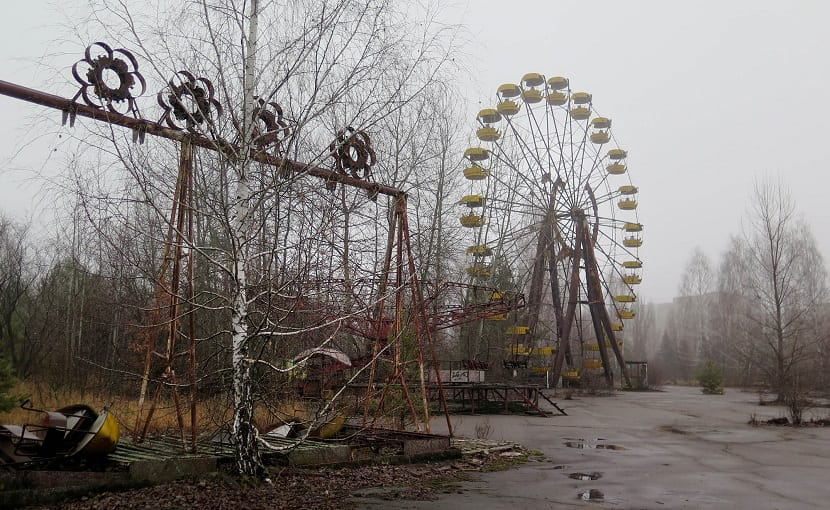
The ghost city of Prypiat, close to the Chernobyl power plant
Extract from "Voices of Chernobyl", with the words of a victim (translated by Keith Gessen)
My little daughter—she’s different. She’s not like the others. She’s going to grow up and ask me: “Why aren’t I like the others?"
When she was born, she wasn’t a baby, she was a little sack, sewed up everywhere, not a single opening, just the eyes. The medical card says: “Girl, born with multiple complex pathologies: aplasia of the anus, aplasia of the vagina, aplasia of the left kidney." That’s how it sounds in medical talk, but more simply: no pee-pee, no butt, one kidney. On the second day I watched her get operated on, on the second day of her life. She opened her eyes and smiled, and I thought that she was about to start crying. But, God, she smiled!
The ones like her don’t live, they die right away. But she didn’t die, because I loved her. In four years she’s had four operations. She’s the only child in Belarus to have survived being born with such complex pathologies. I love her so much. [Stops.] I won’t be able to give birth again. I wouldn’t dare. I came back from the maternity ward, my husband would start kissing me at night, I would lie there and tremble: we can’t, it’s a sin, I'm scared. I heard the doctors talking: “That girl wasn’t born in a shirt, she was born in a suit of armor. If we showed it on television, not a single mother would give birth.” That was about our daughter. How are we supposed to love each other after that?
I went to church and told the minister. He said I needed to pray for my sins. But no one in my family ever killed anyone. What am I guilty of? First they wanted to evacuate our village, and then they crossed it off their lists—the government didn’t have enough money. And right around then I fell in love. I got married. I didn't know that we weren’t allowed to love here. Many years ago, my grandmother read in the Bible that there will be a time when everything is thriving, everything blossoming and fruitful, and there will be many fish in the rivers and animals in the forest, but man won’t be able to use any of it. And he won’t be able to propagate himself in his likeness, to continue his line. I listened to the old prophecies like they were scary fairy tales. I didn’t believe them. Tell everyone about my daughter. Write it down. She’s four years old and she can sing, dance, she knows poetry by heart. Her mental development is normal, she isn't any different from the other kids, only her games are different. She doesn’t play “store,” or “school”—she plays “hospital." She gives her dolls shots, takes their temperature, puts them on IV. If a doll dies, she covers it with a white sheet. We've been living in the hospital with her for four years, we can’t leave her there alone, and she doesn’t even know that you’re supposed to live at home. When we go home for a month or two, she asks me, “When are we going back to the hospital?” That’s where her friends are, that's where they’re growing up. They made an anus for her. And they’re forming a vagina. After the last operation her urinary functioning completely broke down, and they were unable to insert a catheter—they’ll need more operations for that. But from here on out they've advised us to seek medical help abroad. Where are we going to get tens of thousands of dollars if my husband makes 120 dollars a month?
One professor told us quietly: “With her pathologies, your child is of great interest to science. You should write to hospitals in other countries. They would be interested." So I write. [Tries not to cry.] I write that every half hour we have to squeeze out her urine manually, it comes out through artificial openings in the area of her vagina. Where else is there a child in the world who has to have her urine squeezed out of her every half hour? And how much longer can it go on? No one knows the effect of small doses of radiation on the organism of a child. Take my girl, even if it's to experiment. I don't want her to die. I'm all right with her becoming a lab frog, a lab rabbit, just as long as she lives. [Cries.] I’ve written dozens of letters. Oh, God!
She doesn’t understand yet, but someday she'll ask us: why isn't she like everyone else? Why can’t she love a man? Why can’t she have babies? Why won't what happens to butterflies ever happen to her? What happens to birds? To everyone but her? I wanted—I should have been able to prove—so that—I wanted to get papers—so that she’d know—when she grew up—it wasn’t our fault, my husband and I, it wasn’t our love that was at fault. [Tries again not to cry.] I fought for four years—with the doctors, the bureaucrats—I knocked on the doors of important people. It took me four years to finally get a paper from the doctors that confirmed the connection between ionized radiation (in small doses) and her terrible condition.
They refused me for four years, they kept telling me: “Your child is a victim of a congenital handicap." What congenital handicap? She’s a victim of Chernobyl! I studied my family tree—nothing like this has ever happened in our family. Everyone lived until they were eighty or ninety. My grandfather lived until he was 94. The doctors said: “We have instructions. We are supposed to call incidents of this type general sicknesses. In twenty or thirty years, when we have a database about Chernobyl, we'll begin connecting these to ionized radiation. But for the moment science doesn't know enough about it.” But I can't wait twenty or thirty years. I wanted to sue them. Sue the government. They called me crazy, laughed at me, like, There were children like these in ancient Greece, too. One bureaucrat yelled at me: “You want Chernobyl privileges! Chernobyl victim funds!” How I didn't faint in his office, I'll never know.
There was one thing they didn't understand—didn't want to understand—I needed to know that it wasn't our fault. It wasn't our love. [Breaks down. Cries.]
This girl is growing up—she's still a girl—I don't want you to print our name—even our neighbors—even other people on our floor don't know. I'll put a dress on her, and a handkerchief, and they say, “Your Katya is so pretty.” Meanwhile I give pregnant women the strangest looks. I don't look at them, I kind of glance at them real quick. I have all these mixed feelings: surprise and horror, jealousy and joy, even this feeling of vengeance. One time I caught myself thinking that I look the same way at the neighbors' pregnant dog—at the bird in its nest . . .
My girl . . .
Larisa Z., mother
I admit that the two examples above are not very joyful, but they turn an artistic principle into reality. The experience might be harsh, sad and tragic, but something insides changes us… so that, in the end, the world might be indeed a better place !

I let you think about it and invite you to share your feelings about this question, through the comments section or by email.
In a future post, we'll think about the subtle difference between empathy and compassion, because the point is not to get sick, but to feel, understand each other, and get stronger collectively.
V.
 English
  Français