Il existe, de temps en temps, des “synchronismes” étonnants!
Par exemple, n’est il pas étrange voire étonnant, et peut-être même amusant, que la simple odeur des pages d’un livre – “Du côté de chez Swann”, de Marcel Proust – me propulse d’un coup dans un souvenir d’enfance ?
Il s’agissait, pour être concret, de la lecture de “Robin des Bois”, à l’âge de 7 ou 8 ans, dans la maison des grands-parents, durant les vacances d’été près de la mer…
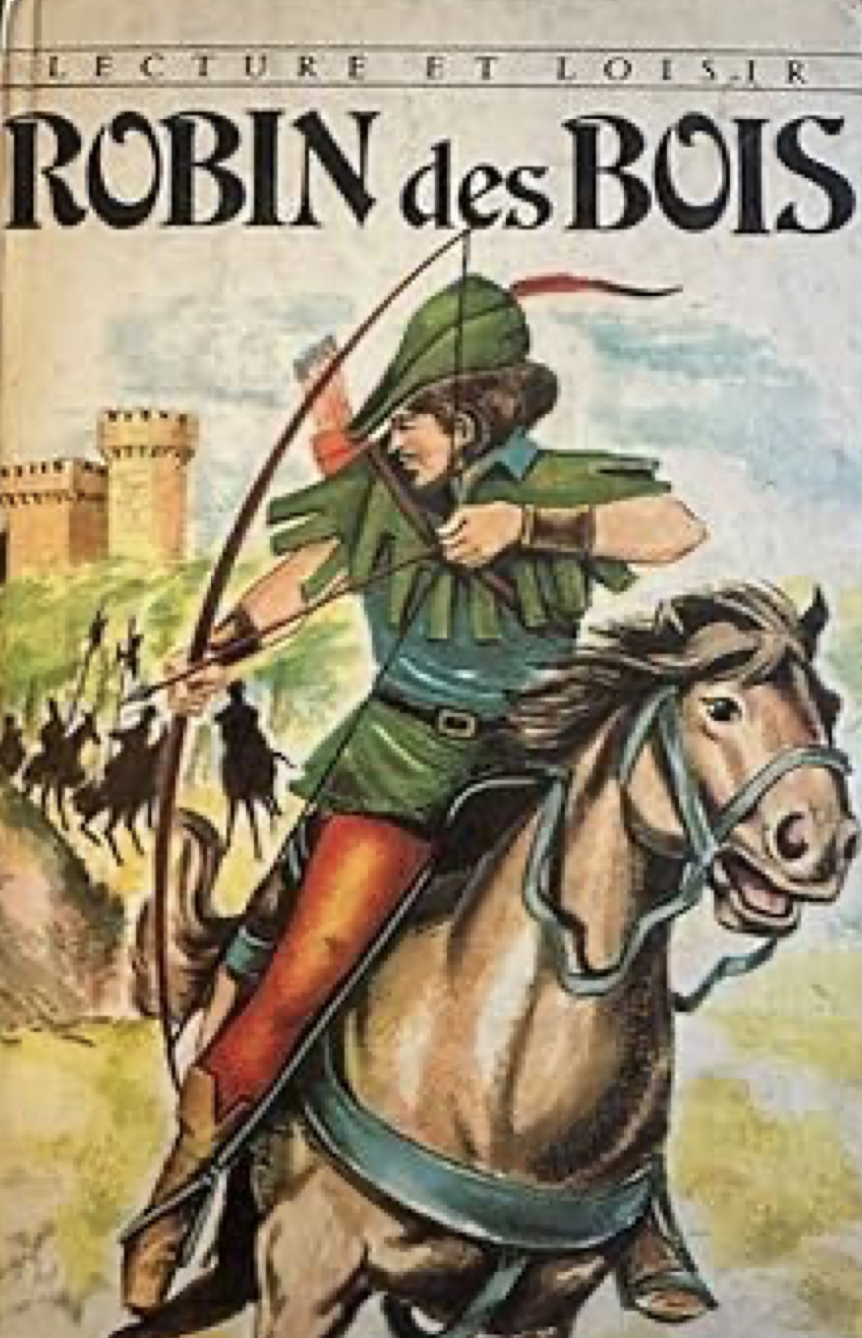
Cela est d’autant plus croustillant que cette situation s’est produite quelques pages seulement avant le fameux passage des « madeleines ».
Pour celles et ceux qui ne l’ont pas encore lu, il s’agit de souvenirs (au moins en partie autobiographiques) au cours desquels le narrateur se rappelle un événement, à la fois clair (par les sens) et confus (au niveau du souvenir conscient) : alors qu’il était enfant et qu’un soir le trouvait froid et presque glacé, sa chère maman lui offrit une madeleine, à tremper dans une tasse de thé, pour le réchauffer.
A peine un morceau de cette pâtisserie en bouche, un éclair fulgurant le saisit. Alors qu’il ne comprend guère ce qui lui arrive, quelques bouchées renouvelées et une plongée réflective dans son passé finissent par le convaincre qu’il s’agit d’une résonance mémorielle. Ce goût si particulier renvoie en effet notre narrateur à un souvenir plus ancien : alors qu’il visitait sa tante, celle-ci lui offrait aussi une madeleine trempée dans sa tasse de thé.
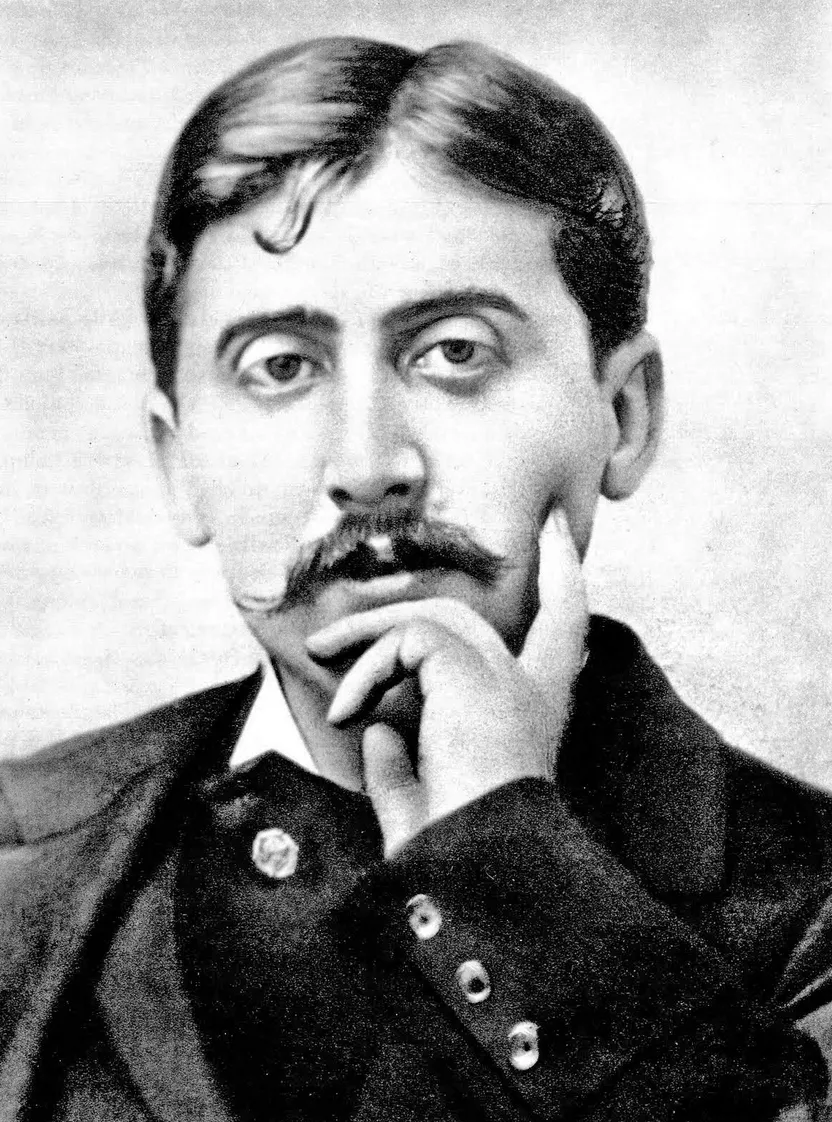
Mais je vous laisse apprécier la prose de Marcel Proust, ci-après, dont j’ai malheureusement dû réduire la longueur, pour les besoins du billet de ce jour (mais vous trouverez un lien vers le texte complet en fin de page) :
And so it is with our own past. It is a labour in vain to attempt to recapture it: all the efforts of our intellect must prove futile. The past is hidden somewhere outside the realm, beyond the reach of intellect [...]
Many years had elapsed during which nothing of Combray, save what was comprised in the theatre and the drama of my going to bed there, had any existence for me, when one day in winter, as I came home, my mother, seeing that I was cold, offered me some tea, a thing I did not ordinarily take. I declined at first, and then, for no particular reason, changed my mind. She sent out for one of those short, plump little cakes called 'petites madeleines,' which look as though they had been moulded in the fluted scallop of a pilgrim's shell. And soon, mechanically, weary after a dull day with the prospect of a depressing morrow, I raised to my lips a spoonful of the tea in which I had soaked a morsel of the cake. No sooner had the warm liquid, and the crumbs with it, touched my palate than a shudder ran through my whole body, and I stopped, intent upon the extraordinary changes that were taking place. An exquisite pleasure had invaded my senses, but individual, detached, with no suggestion of its origin. […] Whence could it have come to me, this all-powerful joy? I was conscious that it was connected with the taste of tea and cake, but that it infinitely transcended those savours, could not, indeed, be of the same nature as theirs. Whence did it come? What did it signify? How could I seize upon and define it?
I drink a second mouthful, in which I find nothing more than in the first, a third, which gives me rather less than the second. It is time to stop; the potion is losing its magic. It is plain that the object of my quest, the truth, lies not in the cup but in myself. […]
Undoubtedly what is thus palpitating in the depths of my being must be the image, the visual memory which, being linked to that taste, has tried to follow it into my conscious mind. But its struggles are too far off, too much confused; scarcely can I perceive the colourless reflection in which are blended the uncapturable whirling medley of radiant hues […]
And suddenly the memory returns. The taste was that of the little crumb of madeleine which on Sunday mornings at Combray (because on those mornings I did not go out before church-time), when I went to say good day to her in her bedroom, my aunt Léonie used to give me, dipping it first in her own cup of real or of lime-flower tea. The sight of the little madeleine had recalled nothing to my mind before I tasted it; perhaps because I had so often seen such things in the interval, without tasting them, on the trays in pastry-cooks' windows, that their image had dissociated itself from those Combray days to take its place among others more recent; perhaps because of those memories, so long abandoned and put out of mind, nothing now survived, everything was scattered; the forms of things, including that of the little scallop-shell of pastry, so richly sensual under its severe, religious folds, were either obliterated or had been so long dormant as to have lost the power of expansion which would have allowed them to resume their place in my consciousness.
[…]
And once I had recognized the taste of the crumb of madeleine soaked in her decoction of lime-flowers which my aunt used to give me […], immediately the old grey house upon the street, where her room was, rose up like the scenery of a theatre to attach itself to the little pavilion, opening on to the garden, which had been built out behind it for my parents […] ; and with the house the town, from morning to night and in all weathers, the Square where I was sent before luncheon, the streets along which I used to run errands, the country roads we took when it was fine. And just as the Japanese amuse themselves by filling a porcelain bowl with water and steeping in it little crumbs of paper which until then are without character or form, but, the moment they become wet, stretch themselves and bend, take on colour and distinctive shape, become flowers or houses or people, permanent and recognisable, so in that moment all the flowers in our garden and in M. Swann's park, and the water-lilies on the Vivonne and the good folk of the village and their little dwellings and the parish church and the whole of Combray and of its surroundings, taking their proper shapes and growing solid, sprang into being, town and gardens alike, from my cup of tea.
“Du côté de chez Swan”, extrait, chapitre 1. Marcel Proust, 1913.
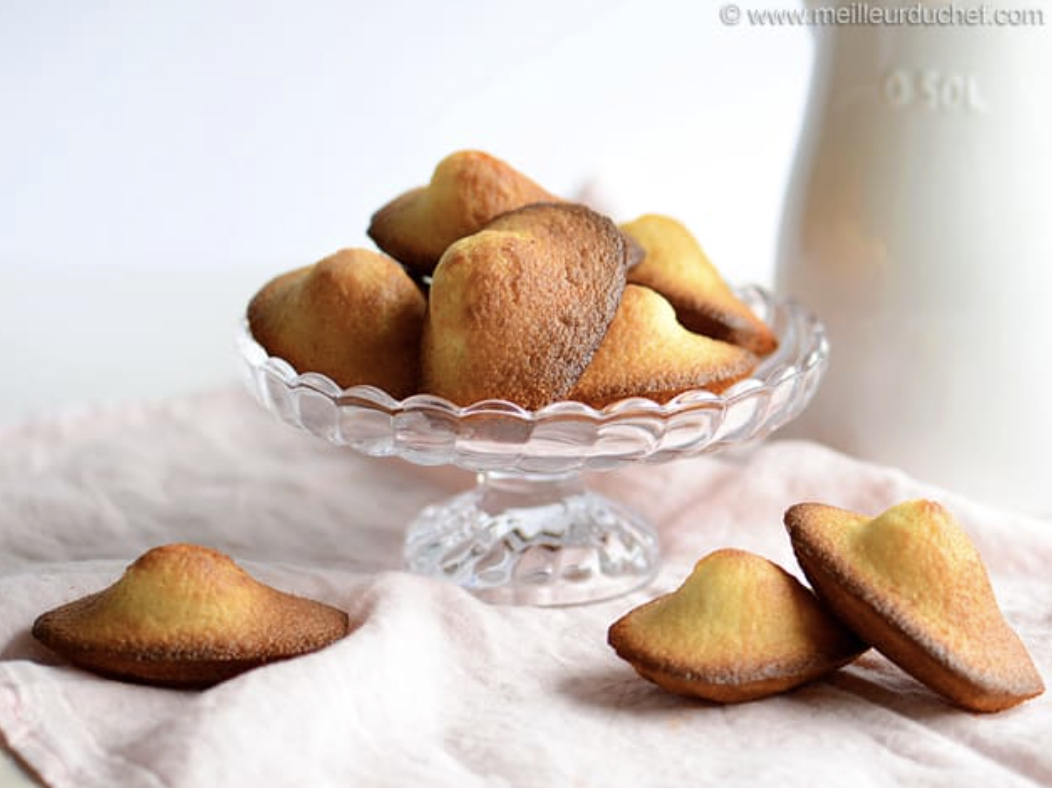
The evocation takes us back into another time, place and feel, a moment which is still alive, deep inside us.
It seems so surprising - doesn't it ? - that we'd like it to happen over and over, in a surge for nostalgia.
That's how it goes, with tastes and scents.
These senses are relatively less valorized in our modern (western) world, more focusing on let's say the eye and the ear (not to talk about the mind, which isn't a sense, but still over used). It might explain why these senses have acquired, thanks to their practical "uselessness", a real power : to disconnect from mind control and to carry a capacity of unconscious evocation.
This is truly fascinating !
Pour en revenir à cet exemple tout personnel, en “respirant” ce livre, cette odeur de papier me renvoyait d’un seul coup dans cette chambre, où j’essayais, alors, de tuer le temps (bien long) de la sieste qui m’était imposée. Au hasard de mes fouilles, dans la bibliothèque désuète des grands parents, j’étais tombé sur cette version abrégée de Robin des Bois, imprimée dans les années 50.
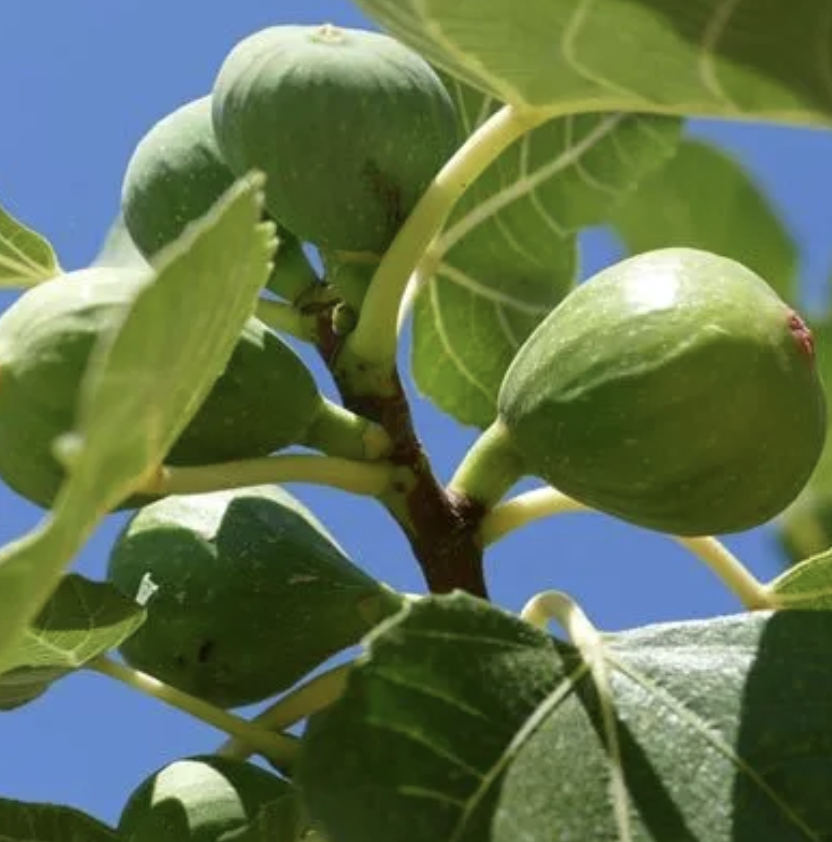
I still see the cover and could probably feel its touch under the hand. But it's also the whole place that comes back to me, alive, with its atmosphere : the dark room, obscured by wooden shutters ; the muffled sounds from the outdoors, the squeaking door that someone tries to open discretely. And I still smell the heady scent of the fig tree… which actually never gave us any fruit at the time we were there !
Yes, when a simple smell, or a flavor, takes us back into remembrance, it feels so nice ! As they say, French people, while sitting at the table in front of a nice roasted chicken, are quite prone to talk vividly about another chicken, which they happened to enjoy in the past. Isn't it strange ?
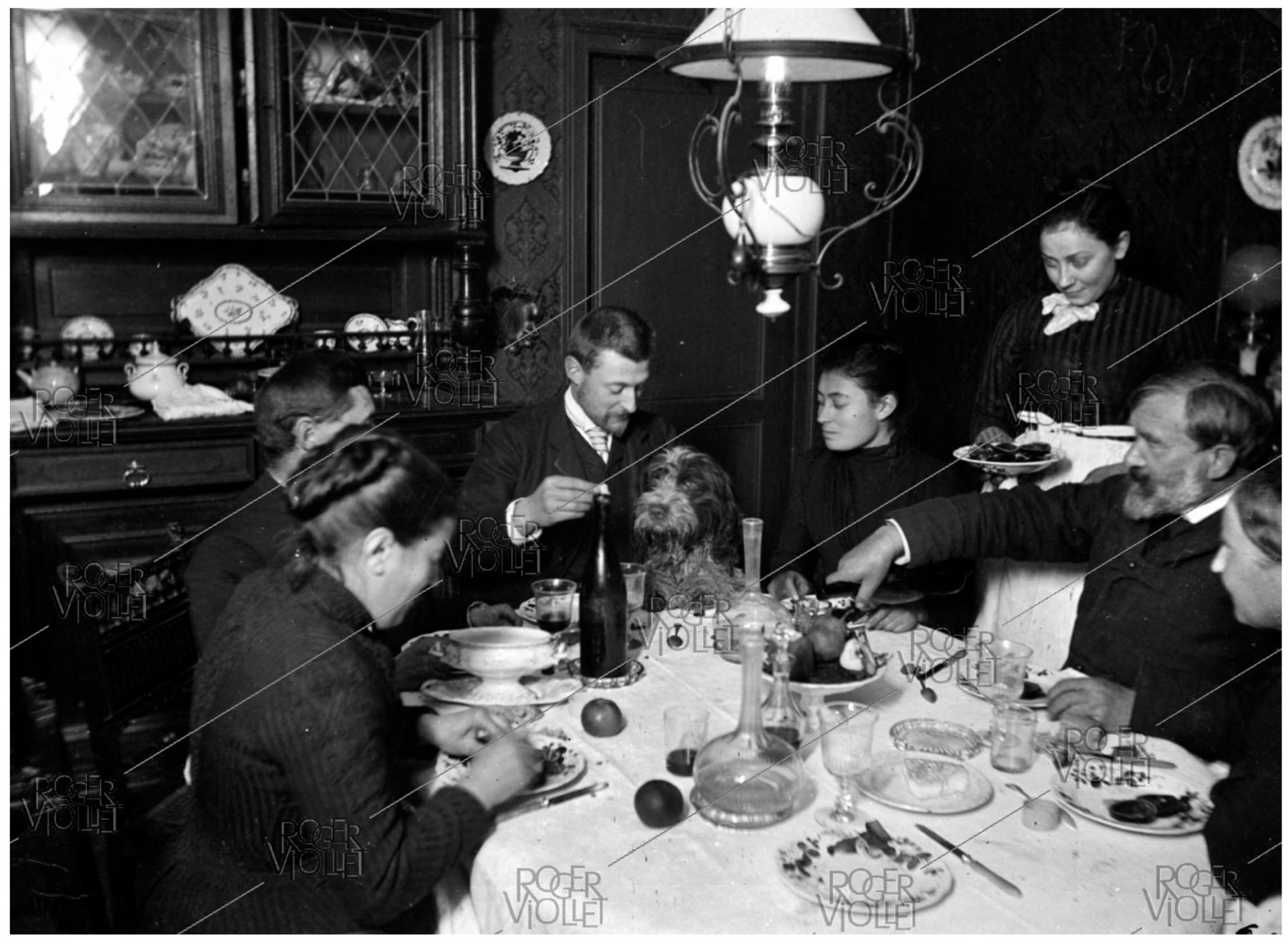
Crédit : Henri Roger, “Repas de famille”, 1890
Usually, these remembrances are rather simple.
Parfois, même, ils ne sont même pas teintés de joie particulière, mais juste d’enfance, et leur évocation suffit.
Rappelons- nous de ce sommet dramatique, l’acmé comme on dit, du film d’animation “Ratatouille”, au cours duquel le petit rat cuisinier décide de préparer au sinistre critique… une ratatouille ! Souvenir de son enfance, ce plat si simple que lui préparait sa maman, le ramène d’un seul coup là bas, et contribue à le transformer.
Once again, a madeleine ! (and a great emotional and artistic piece)
Some time ago, as I was searching for simpler perfumes - as I hate those overprocessed commercial ones, but love woody smells (especially from freshly cut logs) - I found a very specific kind of a fragrance concept : to recreate scent references that we all have more or less in our memories…
- Christmas tree
- Mountain air
- Chocolate chip cookie
- Clean windows
- Fresh laundry
- Espresso
- Caribbean sea (for me that's more imaginary, but still quite stimulating)

Astonishing, right ?
As a matter of fact, I've had the chance to try some of these out (most notably what I could find around woods), and those fragrances do offer real evocations capacities.
As pure perfumes, they are quite elusive, and that's logical as this cologne based, but it still is interesting to put on, in order to talk to the unconscious.
Cela ne pourrait il pas être un beau potentiel pour des spectacles immersifs ? La fugacité pourrait même être un avantage, pour passer d’une atmosphère a l’autre… (Je crois d’ailleurs que cela a été expérimenté dans certains cinémas, mais ne l’ai jamais testé moi-même… Si vous avez cette expérience, merci de la partager en commentaires :))
Ce principe de spectacle immersif recèlerait-il de nouveaux potentiels, ou s’agirait-il plutôt d’une sorte de démesure, finalement contre productive, d’un point de vue artistique ?
For instance, does the 3D technology make better movies ? More impressive ones, for sure (and a tolerance for poor scenarios), but more touching and emotionally involving ?
Lorsque l’on se trouve au théâtre, tout du moins dans une configuration frontale scène / public, cette débauche serait-elle pertinente ?
After all, the magic of a stage performance, with actress and actors might lie in the fragile relation with the audience. The public is asked to use imagination to fill the whole thing and that's also part of the deal.
Sans doute cela serait-il pertinent de réfléchir aux expériences du “théâtre pauvre” de Jerzy Grotowski, dans un prochain article…
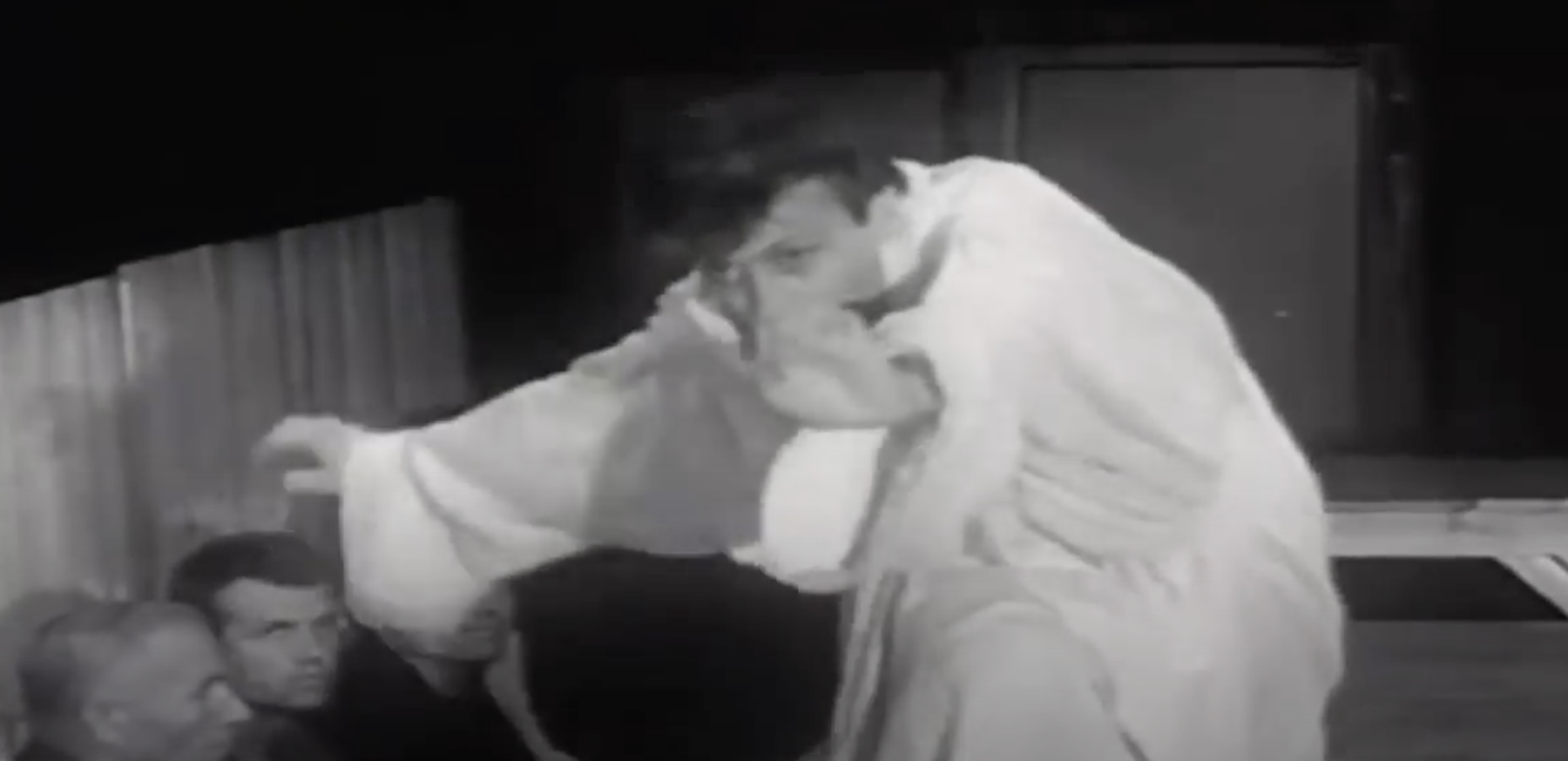
Still from "Dr Faust", J. Grotowski, 1963
If we went even further, shouldn't the palm be given to literature, with its capacity to transport us somewhere else (and yet, deep within), with only printed words on paper ?
A piece of paper, which… smells… and that completes the circle !
PS : je vous encourage a lire (ou relire) Proust – il faut rentrer dedans et avoir le temps, mais c’est une expérience fabuleuse – dont notamment ce premier chapitre Combray, dont la conclusion est si merveilleuse :
https://www.gutenberg.org/ebooks/7178
 English
  Français